
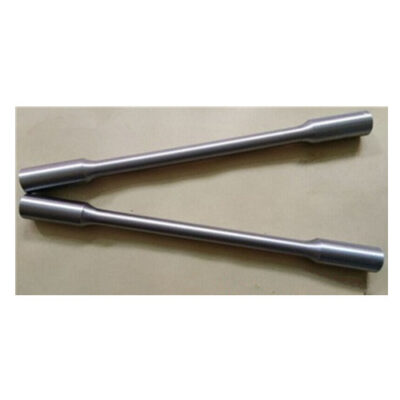
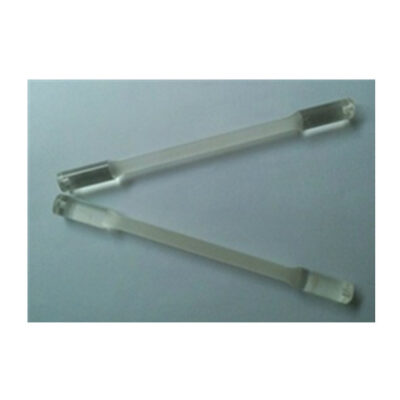
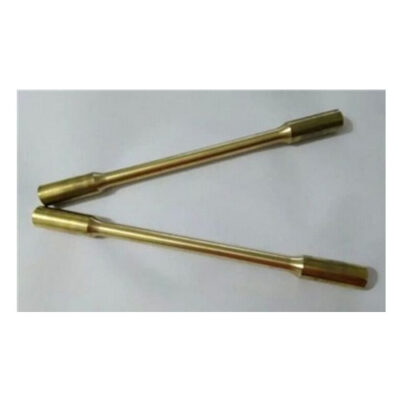
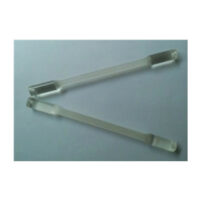

Various Materials of Tensile Specimens
Tensile testing is a fundamental mechanical test where a prepared specimen is subjected to a controlled tension until failure. The results obtained are critical for material selection, quality control, and predicting performance in real-world applications.
Key Data Obtained from a Tensile Test:
-
Tensile Strength: The maximum stress a material can withstand while being stretched before it fails or breaks.
-
Yield Strength: The stress at which a material begins to deform plastically. Beyond this point, the deformation is permanent.
-
Elongation: A measure of the material’s ductility, expressed as the percentage increase in length at the point of fracture.
-
Young’s Modulus (Elastic Modulus): A measure of the material’s stiffness, representing its resistance to elastic deformation under load.
-
Strain-Hardening Exponent: Describes how a material becomes stronger and harder as it is plastically deformed.
These properties are indispensable for engineers and designers when selecting the right material for a specific application, ensuring it can endure the required loads and environmental conditions.
Why Test Various Materials?
The data from tensile tests provides a universal language for comparing materials. For instance, a high Young’s Modulus in a carbon fiber composite makes it ideal for a stiff, lightweight aircraft component, whereas the high Elongation of a rubber elastomer is essential for a seal that must stretch without tearing.
Ultimately, by testing tensile specimens across different materials, manufacturers can ensure safety, optimize designs, and innovate with new materials for future applications.
Materials for Tensile Specimens: A Comparative Overview
Tensile testing provides essential mechanical property data for a wide range of materials, consequently enabling engineers to select the optimal material for specific applications. Below is a detailed comparison of common tensile specimen materials and their key characteristics.
Material Comparison Table
| Material | Key Tensile Properties | Common Applications |
|---|---|---|
| Low Carbon Steel | Specifically, high ductility with a well-defined yield point, combined with moderate tensile strength and excellent formability. | As a result, it is ideal for automotive bodies, structural shapes, wires, pipes, and general fabrication. |
| Polymethylmethacrylate (PMMA) | Characterized by brittle fracture and low elongation, this transparent material also offers low tensile strength but good impact resistance. | Therefore, it is primarily used for windows, signage, lenses, and displays where optical clarity is critical. |
| Alloy Steel | Notably high strength and good toughness, along with excellent wear resistance and responsiveness to heat treatment. | Consequently, it is selected for demanding applications like gears, shafts, bearings, and high-stress structural components. |
| Medium Carbon Steel | Offering a balanced strength and ductility, it can also be heat treated and provides good wear resistance. | Thus, it is commonly found in railway wheels, crankshafts, and machinery parts requiring higher strength. |
| Aluminium Alloy | Primarily lightweight with moderate to high strength, in addition to good corrosion resistance. | As a result, it is extensively used in aerospace frames, automotive parts, and consumer electronics. |
| Brass | Featuring good corrosion resistance paired with excellent malleability and electrical conductivity. | Therefore, it is well-suited for plumbing fittings, musical instruments, electrical connectors, and decorative items. |